Smoke and CO Alarms
Smoke Alarms and Carbon Monoxide Alarms Save Lives
Smoke alarms play a crucial role in keeping us safe, and we encourage you to help protect your family and home by ensuring smoke alarms and carbon monoxide alarms are installed correctly. Taking these simple steps can make a big difference in keeping your loved ones safe.
THE RISK OF DYING IN A HOME FIRE IS CUT IN HALF IN HOMES WITH WORKING SMOKE ALARMS. (NFPA)
- Install smoke alarms in every sleeping room and outside each separate sleeping area. Install alarms on every level of the home. Install alarms in the basement. Do not put smoke alarms in your kitchen or bathrooms.
- It is best to use interconnected smoke alarms so that when one smoke alarm sounds, they all sound.
- Test all smoke alarms at least once a month and replace the batteries when you hear the alarm "chirp". Replace the entire alarm after 10 years.
- People who are deaf or hard-of-hearing can use special alarms to alert them. These include alarms with strobe lights and bed shakers that can be purchased online or any hardware store.

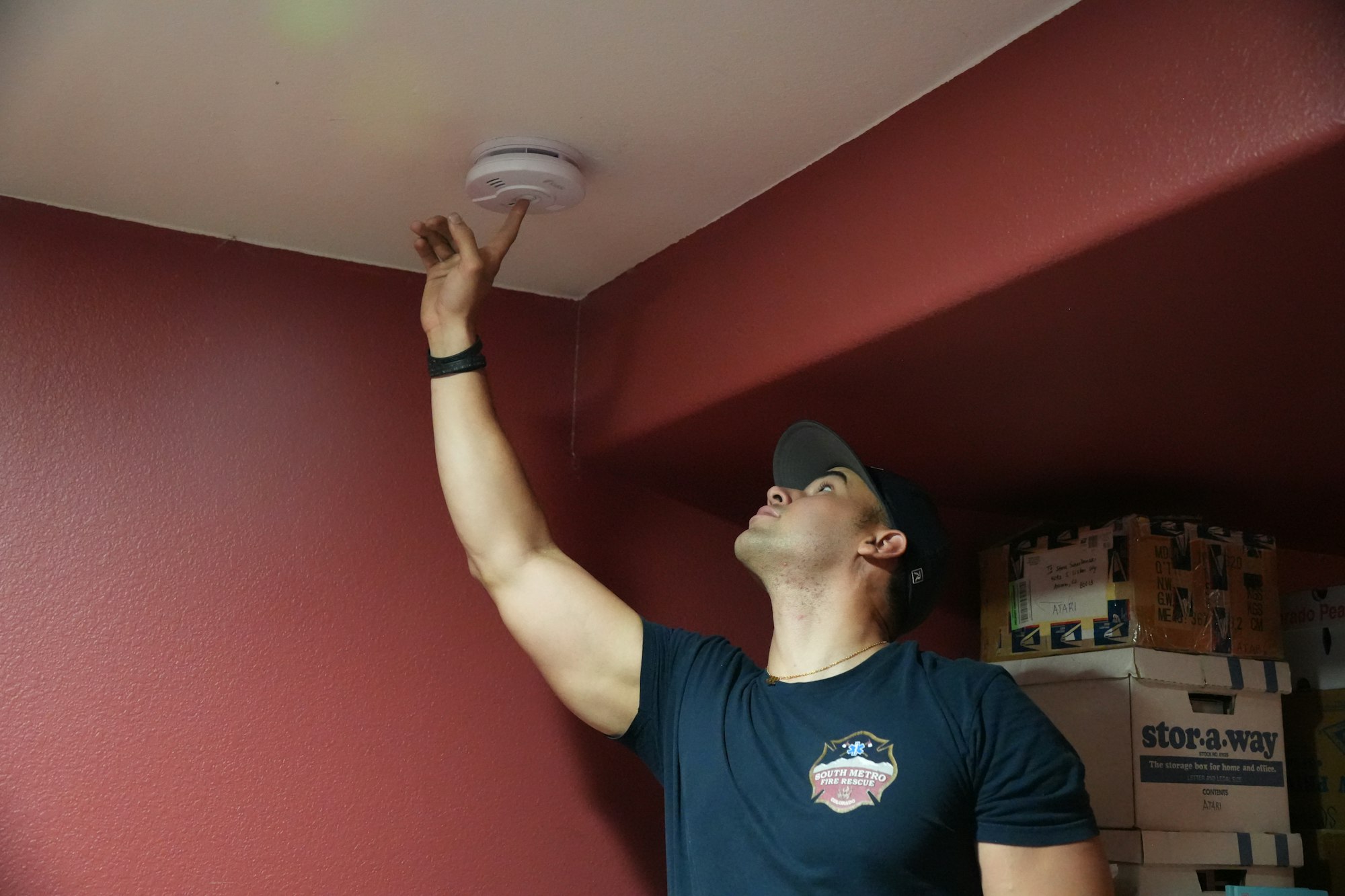
Smoke alarms should be tested at least once a month. You can accomplish this by pushing the "test" button.
If you hear a short "chirp" noise periodically, this means your smoke alarm needs a new battery or may need to be completely replaced. Smoke alarms expire 10 years after their manufacture date, NOT from when you installed them. Their expiration date can be found on the side or bottom of the alarm.
To review the Sounds of Fire Safety, click here to watch a video from the NFPA!
The South Metro Community Risk Reduction Team is committed to providing safety devices to those in our district who need them most. If you cannot afford smoke alarms or bed shaker/strobe lights devices, please reach out to our Community Risk Reduction Team to assist you on our Contact Us page. We can provide these for you for free.
Please check our District Map to ensure your home is located within our jurisdiction.
Smoke alarms with strobe lights can be purchased for individuals who are hearing impaired (BRK/First Alert, Gentex, and Kidde brands offer this type of smoke alarm). When people who are hard of hearing are asleep, an alert device that uses a loud, mixed, low-pitched sound can wake them. They may also find a bed shaker helpful. These devices are triggered by the sound of the smoke alarm. Do additional research to figure out which device would be most helpful for you and your family.
Watch this video to get started on your research: Smoke alarms for those who are deaf or hard of hearing
For additional information about Preparing for Emergencies for people with Disabilities, please follow this link to the Red Cross: Inclusive Preparedness Resources
If you are in need of a bed shaker device, you can email us directly at ReducingRisk@southmetro.org
The Dangers of Carbon Monoxide (CO)
Carbon monoxide (CO) is a gas you cannot see, taste, or smell. It is often called "the invisible killer." CO poisoning can result from gas-, gasoline-, and diesel-fueled vehicles idling inside garages or malfunctioning or improperly vented gas ranges, water heaters, clothes dryers, furnaces, gas fireplaces, and portable generators. When fuel-burning appliances or engines don’t vent properly, especially in enclosed or airtight areas, carbon monoxide can build up to dangerous concentrations.
- Install CO alarms outside each separate sleeping area and on every level of your home.
- If you have combination Smoke/CO Alarms, follow the manufacturer instructions for installation.
- Bring a travel CO alarm with you when traveling or staying away from your home.
- If a CO alarm emits a “trouble” signal, check and replace the battery. If the alarm continues to sound, contact your local fire department
- This guidance is directly from the National Fire Protection Association (NFPA). Click the following link to read more on Carbon Monoxide Alarms: NFPA Carbon Monoxide Alarm Guidance
If you suspect a carbon monoxide leak or are experiencing symptoms, call 9-1-1 immediately.



Once carbon monoxide enters the bloodstream, it binds to red blood cells and deprives the body of oxygen, leading to hypoxia.
Early symptoms of CO poisoning can include mild headache, nausea, vomiting, fatigue, and flu-like discomfort.
With continued exposure, symptoms progress to drowsiness, confusion, and rapid heart rate. Prolonged or high-level exposure can cause seizures, unconsciousness, permanent brain damage, heart and lung failure, and death.
If several people in the same area develop similar symptoms at the same time, it may indicate an environmental health hazard such as elevated carbon monoxide.
How to Prevent Carbon Monoxide Poisoning
- Have fuel-burning appliances inspected annually
- Install carbon monoxide alarms on every level of the home, and near sleeping and fuel-burning appliance areas. If the alarm sounds with four beeps, get outside and call 9-1-1.
- Watch for visual indicators like soot stains or black residue on appliances or above fireplaces.
- Replace CO alarms every 5–7 years (or per manufacturer instructions).
- Operate generators at least 20 feet away from buildings.
- Never leave a vehicle running inside a garage (even with garage door open!).
- Don’t use outdoor appliances (grills, gas lanterns, etc.) indoors or near open windows.
- Clear snow from around vehicle exhaust pipes during winter.
- Stay upwind of outdoor CO sources whenever possible.
Visit NCOAA’s Website for additional information on the dangers of CO.